

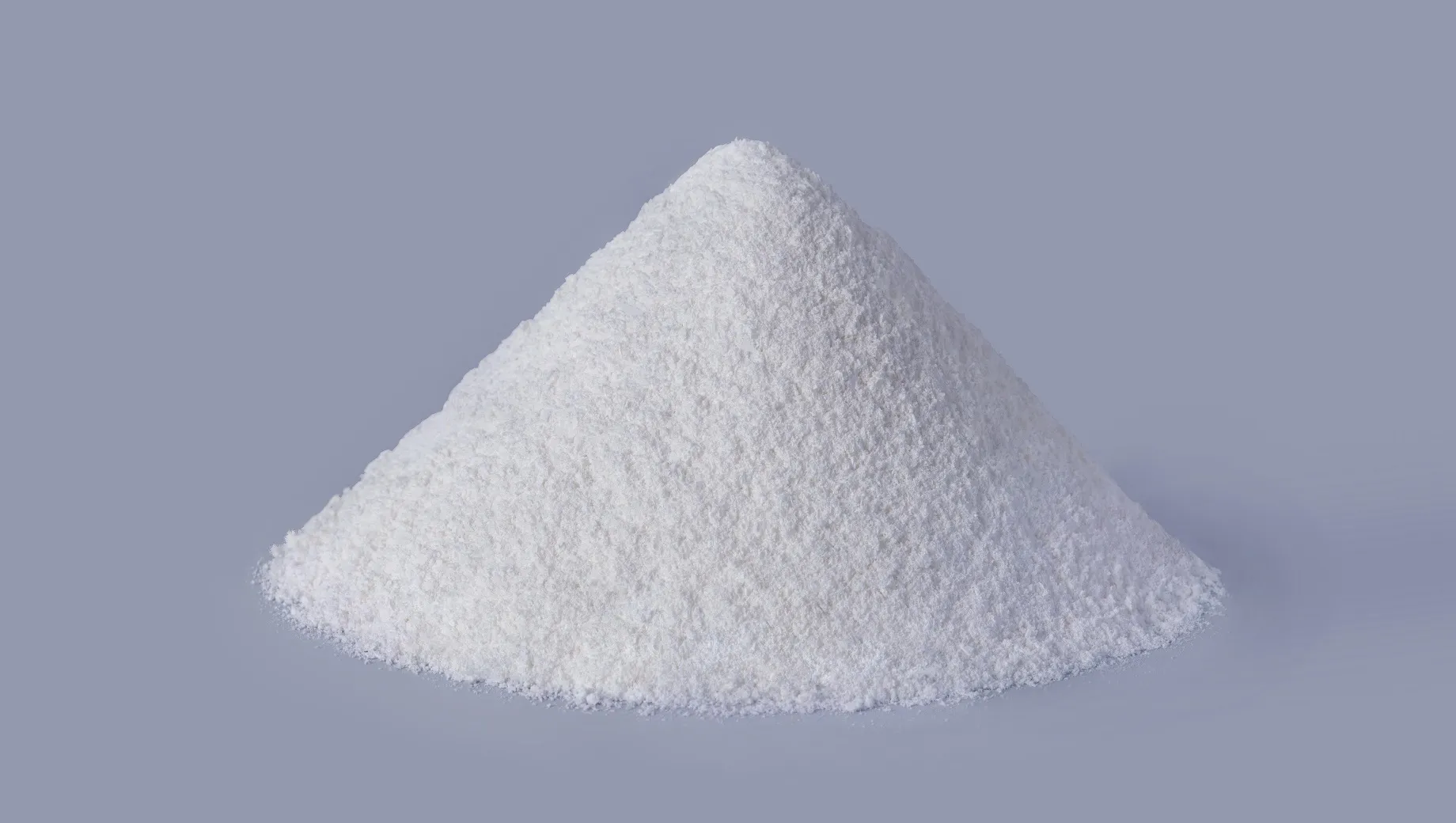
Zinc Oxide (ZnO) is a widely used and essential material in the rubber and plastics industries. As a white powder compound, it is highly stable, efficient, and versatile, making it a preferred choice for manufacturers. Below is an overview of zinc oxide’s properties and applications.
1. Basic Properties of Zinc Oxide
- Also known as: Zinc White, Zinc Oxide Powder
- Chemical Name: Zinc Oxide (Zinc White)
- Chemical Formula: ZnO
- CAS Number: [1314-13-2]
Physical & Chemical Properties
- Appearance: White hexagonal crystalline powder
- Relative Density: 5.41–5.67
- Refractive Index (nd): 2.0041
- Melting Point: 1975°C
- Characteristics:
- Amphoteric oxide, insoluble in water and ethanol
- Reacts with acids, bases, and amino acids to form salts or complexes
- Excellent acid and heat resistance
- Absorbs carbon dioxide and moisture
2. Key Applications of Zinc Oxide
Zinc oxide plays a crucial role in various industries, particularly in rubber and plastics manufacturing. Common applications include:
- Rubber Manufacturing: A key activator in the vulcanization process, enhancing strength, abrasion resistance, and aging resistance.
- Plastic Additive: Improves UV resistance, extending product lifespan.
- Coatings & Ceramics: Used as a pigment and antibacterial agent in coatings; serves as a glaze component in ceramics.
- Cosmetics & Medical Products: Due to its antibacterial and antioxidant properties, it is widely used in sunscreens and medicinal ointments.
3. How to Choose the Right Zinc Oxide Supplier
Selecting a reliable zinc oxide supplier is essential for consistent product quality. Key considerations include:
- Product Type: Determine if “Active Zinc Oxide“ is required, as it offers higher surface activity, making it ideal for high-performance rubber and plastic applications.
- Quality Certification: Choose suppliers with ISO or other international certifications to ensure compliance with industry standards.
- Zinc Oxide Price Comparison: Prices vary based on purity, particle size, and activity level. Understanding the cost-performance ratio through supplier communication is essential.
What is Active Zinc Oxide?
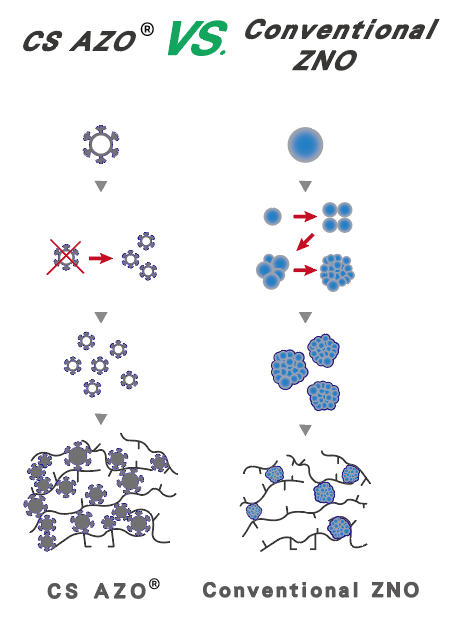
It is a special form of Zinc Oxide (CS AZO) characterized by a high specific surface area, extremely fine particle size, and extremely high chemical activity.
- Why is it called “Active”?
1.High Specific Surface Area: This refers to zinc oxide with a more porous structure and finer particles. Due to the large contact surface, it requires a lower dosage and exhibits faster reaction rates.
2.Extremely Small Particle Size: The particle size is typically at the nanoscale , whereas ordinary zinc oxide particles are larger.
3.Crystal Structure: During the manufacturing process (typically a wet chemical process), a specific crystalline structure (or crystal growth) is formed, which further enhances its chemical reactivity.
💡Active Zinc Oxide (CS AZO) vs. Ordinary Zinc Oxide💡
To help you better understand the differences between the two, please refer to the table below:
| Item | CS AZO | Conventional Zinc Oxide |
|---|---|---|
| Production Process | Wet Process (Chemical precipitation followed by low-temperature calcination) | Thermal Process (Direct Process or Indirect/French Process) |
| Structure | Flake-like | Solid Spherical |
| Polarity | ★ Reduced polarity, less prone to agglomeration | High polarity, prone to agglomeration |
| Dispersion | ★ Easily dispersible | Difficult to disperse |
| Specific Surface Area | ★ Significantly increased | Standard |
| Vulcanization Efficiency | ★ Significantly enhanced | Standard |
4. Factors Influencing Zinc Oxide Prices
Zinc oxide prices are affected by multiple factors, including:
- Raw Material Supply: Availability of zinc ore impacts pricing.
- Market Demand: Growing demand in automotive, electronics, and coatings industries drives price fluctuations.
- Production Technology: Active zinc oxide requires more complex processing, leading to higher costs.
- Global Supply Chain & Environmental Policies: Changes in supply chains and eco-regulations influence market trends.
Conclusion
Zinc Oxide quality is critical for performance, yet navigating complex specifications and price volatility to find the best value is a challenge.
As a Professional Rubber Agent, we simplify this for you. From tracking global market trends to sourcing premium Active Zinc Oxide, our one-stop service ensures worry-free production.
🌟Looking for a trusted partner? Contact us right now!🌟